5 Signs Your Website Isn’t Broken — It’s Just Overwhelming
You avoid your website. You know you should update it, add a blog post, or finally fix that page that’s been bothering you for months. But every time you sit down to do it, something stops you. It feels too hard, too risky, or too confusing to know where to start. This feeling can lead to what many experience as website overwhelm.
The concept of website overwhelm can affect anyone managing a website. It’s essential to recognise that these feelings are common among website owners.
Website overwhelm often arises from trying to juggle too many tasks at once, leading to frustration and confusion.
Here’s the thing: that feeling isn’t a sign your website is a mess. More often, it’s a sign you’ve been trying to hold too much in your head at once — and the website overwhelm has made a normal, manageable website feel like a problem you’re not equipped to solve.
Understanding the signs of website overwhelm can help you take actionable steps to alleviate the stress.
Understanding Website Overwhelm
Before you book a full rebuild or spiral into another round of Googling, let’s slow down. These five signs might tell you something different.

When clarity is established, the anxiety surrounding website overwhelm tends to diminish significantly.
1. You Don’t Know What Your Website Is Actually Supposed to Do
Clarity is key to overcoming website overwhelm, allowing you to focus on specific goals.
Most website stress isn’t about the site itself — it’s about not having a clear picture of what it’s there to achieve. If you’re not sure what action you want visitors to take, you’ll keep fiddling. You’ll move things around, change the colours, tweak the wording, and still feel like something’s off.
But the problem isn’t design. It’s clarity.
A website that “just works” starts with one clear purpose for each page. Not five. Not a general vague goal of looking professional. One purpose: what should someone do or feel when they land here?
Once you have that, a lot of the visual and technical decisions become much simpler.

2. You’re Trying to Fix Everything at Once
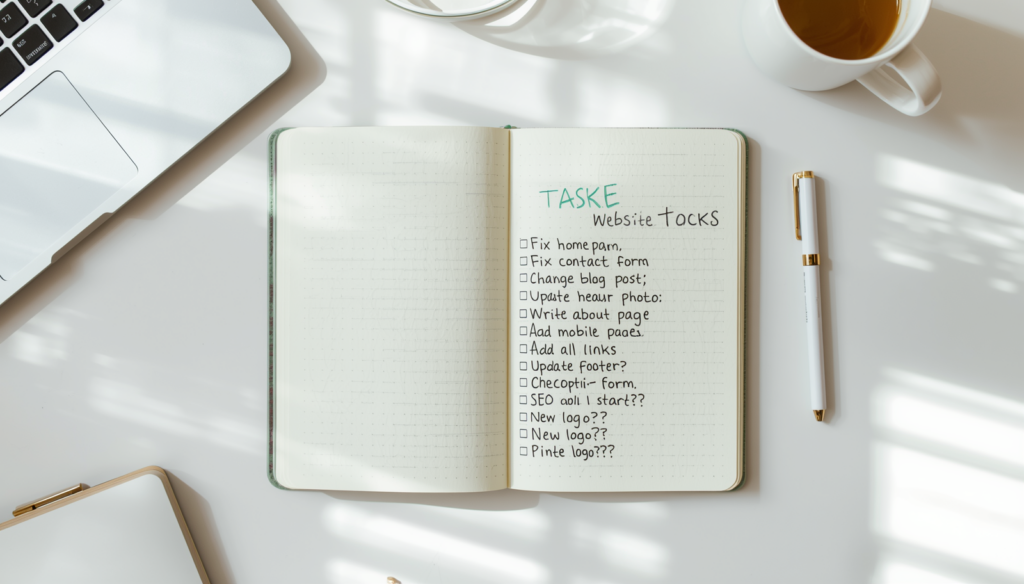
If your to-do list for your website has 14 items on it, that’s not a plan — that’s a pressure cooker. No wonder you’re avoiding it.
Overwhelm doesn’t mean your website is beyond help. It usually means you haven’t been given permission to just pick one thing and do that first.
Here’s what I find with almost every client at this stage: when we sit down and look at the site together, three or four of those 14 things don’t actually matter. A couple more can wait six months. And the real priorities — the ones that will genuinely move the needle — are usually two or three things, tops.
You don’t need to fix your whole website. You need to fix the right part of it first.
3. You’re Scared You’ll Break Something
By acknowledging website overwhelm, you can better manage your expectations and actions.
This one comes up more than almost anything else. “I’m not technical — I’m scared I’ll click the wrong thing.” So nothing gets updated. The site sits as-is, slowly getting more out of date, while you quietly dread it.
Managing website overwhelm is about taking manageable steps instead of trying to fix everything at once.
Ultimately, addressing website overwhelm can transform your approach to managing your site and lead to better outcomes.
But fear of breaking things isn’t a sign your website is broken. It’s a sign you haven’t been shown how it works in a way that makes sense to you.
Most websites built on modern platforms like WordPress are more forgiving than they look. The things that feel risky usually aren’t. And the things that can cause real issues? They’re pretty specific — and once you know what they are, you stop worrying about everything else.
Understanding your own website — even at a basic level — changes your relationship with it entirely. The goal isn’t for you to become a web designer. It’s for you to feel like you’re in your own house, not trespassing.
By recognising website overwhelm, you can tackle your tasks with confidence and reduce the feeling of being overwhelmed.
It’s crucial to break tasks down and not let website overwhelm take over your capabilities.
4. You’ve Been Getting Conflicting Advice
Taking small steps to address website overwhelm can lead to significant improvements over time.
You searched the problem. You found five different answers. Someone in a Facebook group said one thing. A blog post said the opposite. A friend suggested a completely different platform altogether.
Addressing website overwhelm can lead to a more productive and enjoyable experience as you manage your online presence.
Now you’re more confused than when you started.
Conflicting advice isn’t a sign your website is uniquely difficult. It’s a sign that generic advice doesn’t account for your website, your platform, your audience, or where you are in your business right now.
The fix isn’t more research. It’s one clear-eyed look at your actual site, from someone who can tell you what applies to your situation — and what doesn’t.

5. It’s Been on Your To-Do List for Months
If your website has been sitting on your mental load for a long time without moving, that’s not laziness. That’s a task that hasn’t been broken down into something actually doable.
Recognising and addressing website overwhelm is the first step toward a smoother experience.
Big, vague tasks don’t get done. “Sort out my website” is not a task — it’s a category. And until it becomes something like “update the About page bio” or “add a contact form to the services page,” it’s going to keep sitting there, weighing on you.
The good news: this one is genuinely simple to fix. It just takes someone helping you translate the big vague thing into a handful of small, specific ones.

✨ A small thing you can do right now
Pick one sign from this list that felt most like you.
Just one. Don’t try to solve all five.
Then ask yourself: what’s the smallest possible step I could take on just that one thing this week?
It might be writing down what you actually want your homepage to do. It might be logging into your website and clicking around for five minutes without trying to fix anything. It might just be admitting that the to-do list is too long and crossing three things off permanently.
Small and done beats big and avoided. Every time.
Ultimately, finding ways to reduce website overwhelm will enhance your overall website management experience.
Ready to stop guessing and get some clarity?
If you’d like someone to look at your website with you — cut through the noise, tell you what actually matters, and give you a clear, calm plan for what’s next — that’s exactly what I do.